
Begin with Whadjuk Country
Fremantle history begins with a place already inhabited when British settlers arrived. The Whadjuk are the Traditional Owners of Fremantle/Walyalup. Land on both sides of the Swan River is associated with ceremonies, cultural practices and trade. Whadjuk Noongar culture is living culture, integral to understanding the place today as well as its past. A history walk should leave space for that continuing relationship with Country.
European settlement, colonial imprisonment and maritime commerce are connected chapters, but they are not the whole story. Read the buildings alongside the people and systems that shaped them. The Round House and Fremantle Prison belong to different stages of colonial history, while the West End and port help place those institutions in a wider urban setting. This sequence provides a useful framework before choosing which sites to visit.
1829: a settler colony, followed by the Round House
The Swan River Colony was founded as a British settler colony in 1829. The beginning of settlement should be distinguished from the later introduction of convict transportation. Economic problems and demands for convict labour formed part of the colony's subsequent development. The official proclamation of the penal colony came on 6 November 1849, with the first convict transport arriving in 1850.
The Round House opened in January 1831 as a colonial prison. It therefore predates Fremantle Prison and belongs to the earlier settlement period. At Arthur Head, it offers a physical starting point for understanding that distinction. Seeing the two prisons as separate places helps avoid compressing the entire colonial period into a single convict story.
A practical history route can begin with the Round House and continue through the historic streets before a separately planned prison visit. The sights guide brings these places together with the museums and waterfront. Choose the order around opening hours and the amount of time you want to spend inside each site.
1850 onwards: convict labour and Fremantle Prison
After the first transport in 1850, the prison was built through convict labour from 1852 to 1859. The main cell block was first occupied in 1855, before the overall construction period ended. It took the name Fremantle Prison in 1867. Convict transportation ended in 1868, but the prison's later history continued for more than a century.
Forced labour and colonial expansion are central to the significance of the Australian Convict Sites. That story also includes the displacement of Indigenous people. The surviving stone buildings need to be understood in this context: the work involved coercion, and the expansion of the colony took place on inhabited Country. Consider the architecture alongside what these institutions meant for the people affected by them.
Fremantle Prison continued operating until 8 November 1991, when prisoners were moved to Casuarina. The end of transportation and the closure of the prison are therefore very different milestones. In 2010 the prison became part of the serial UNESCO World Heritage property Australian Convict Sites, which has 11 component sites. This status applies to the prison within that property, rather than to all of Fremantle.
For a visit, distinguish the free Gatehouse area from the guided interior. The Fremantle Prison guide explains the separate visits, booking arrangements and age or mobility requirements. Plan enough attention for difficult material, including violence and historical discrimination, when deciding which visit is appropriate for your party.
West End and the port city
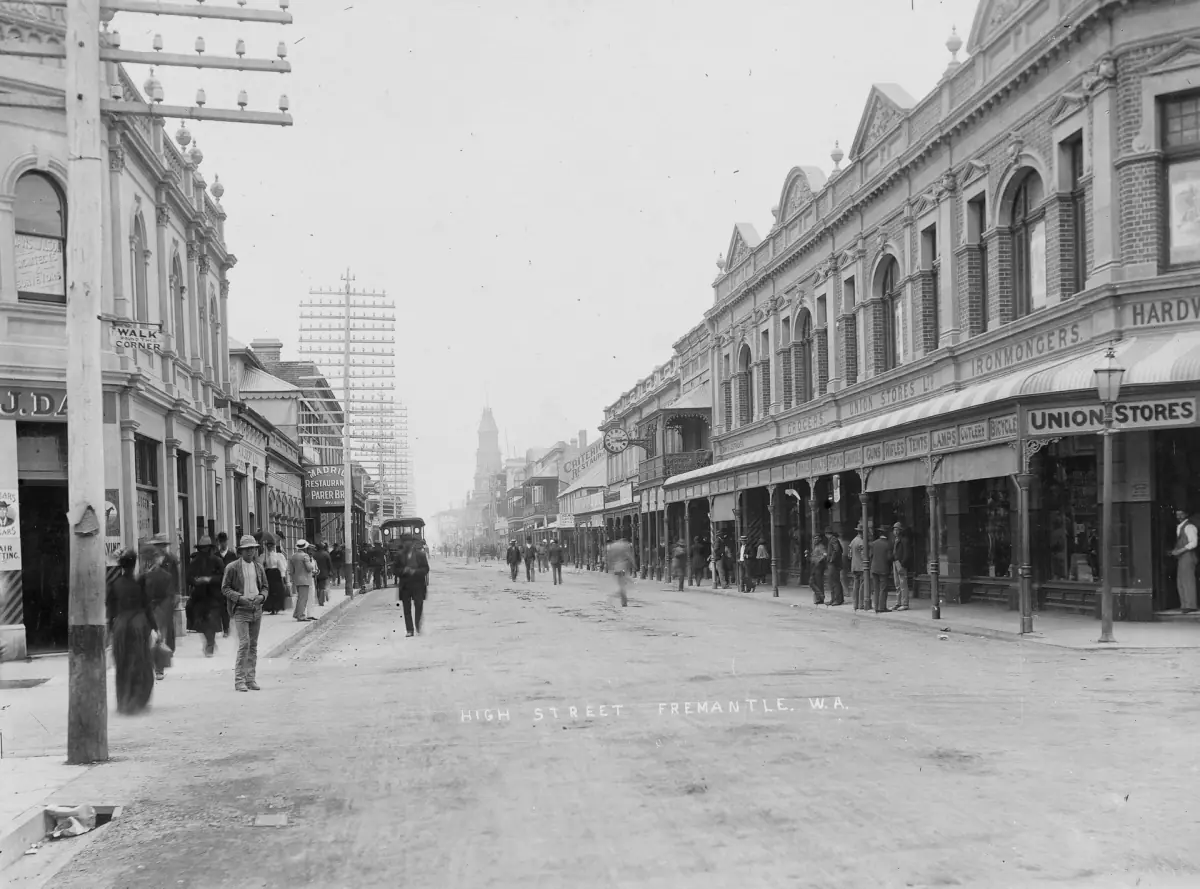
The West End is the historic central precinct, entered in the State Register in 2017. Walking through it provides a second perspective alongside the prison: streets and heritage buildings within a city whose setting is the mouth of the Swan River. The historical photograph of High Street illustrates an earlier streetscape, not the appearance of every building today.
The working port gives that urban history a continuing context. Fremantle's Inner Harbour handles containers, general cargo and cruise ships; the Outer Harbour lies farther south. Port operations and public waterfront visits are different uses of the shoreline. Treat a harbour walk as one view of a working place, with access governed by the area you are in.
Two museums, different maritime stories
The Maritime Museum at Victoria Quay includes Australia II and Parry Endeavour in its permanent displays. The Shipwrecks Museum on Cliff Street focuses on maritime archaeology and ship losses, in historic Commissariat buildings. Its conserved Batavia timbers are recovered original parts, not a complete surviving ship. Choose between the museums by subject or give each a separate place in your day; their names do not describe the same collection.
Culture and storytelling
This guided experience brings cultural education and storytelling together.
Hand-picked tours, booked through GetYourGuide. Prices are indicative starting prices in Australian dollars (as of October 2026). Tap a tour for live availability and the current price in your currency.
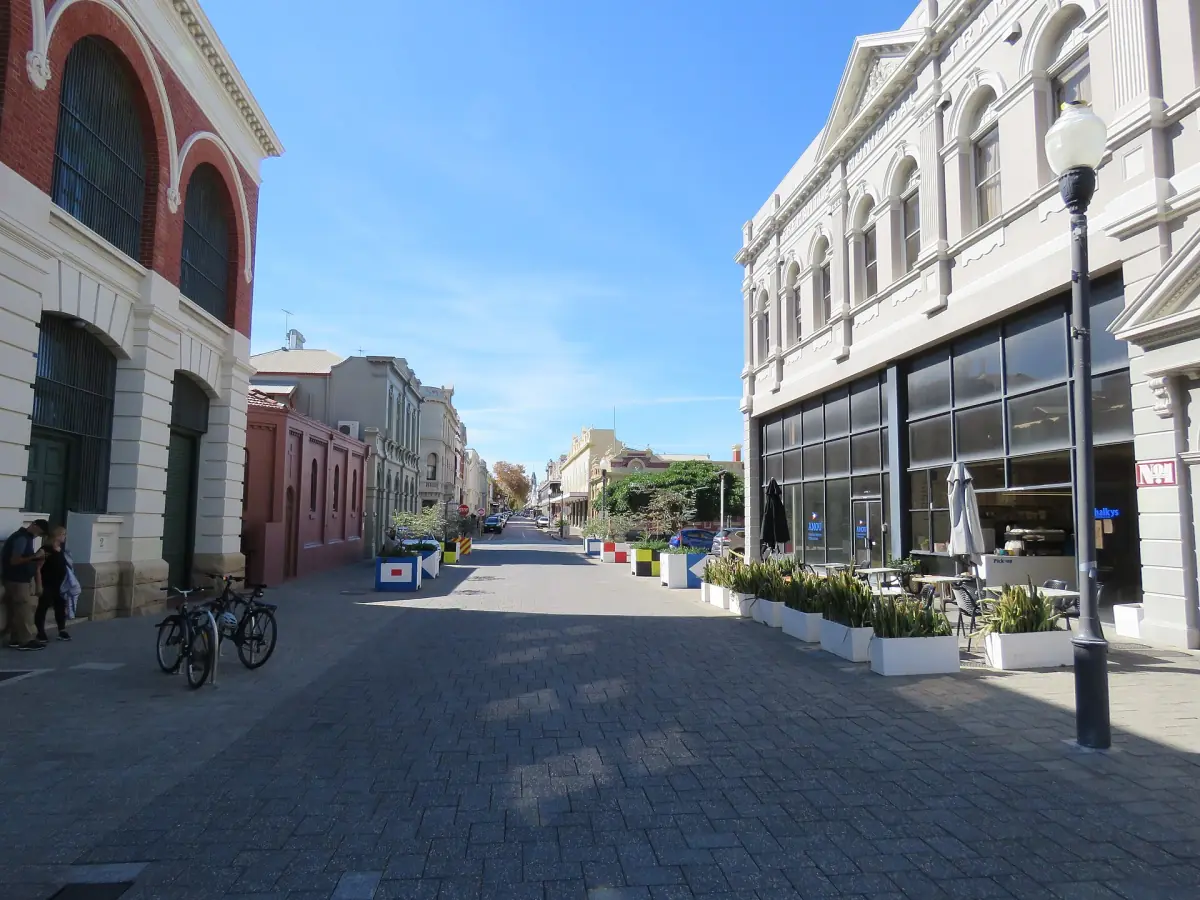
Discover Fremantle through cultural storytelling
The 90-minute guided walk includes a Welcome to Country, sand ceremony and cultural education, starting at the Shipwrecks Museum.
Listen to stories in the place they describe
The cultural walk includes guided storytelling and knowledge of bush medicine and food, alongside a Welcome to Country and sand ceremony. Its meeting point is the WA Shipwrecks Museum, 47 Cliff Street. This is a cultural walking experience; museum interiors and the prison are separate visits. Knowledge about food forms part of the interpretation rather than a promised meal.
Approach the experience as an opportunity to listen to living cultural knowledge, and follow the guide's direction during the ceremony. For a comparison of bookable walks, use the walking tours page. The arrival guide helps with reaching central Fremantle before meeting on Cliff Street.
Questions about Fremantle's past
Was the colony founded for convicts in 1829?
It began as a British settler colony in 1829. The penal-colony proclamation followed on 6 November 1849, and the first convict transport arrived in 1850.
Which prison came first?
The Round House opened in January 1831. Fremantle Prison was built from 1852 to 1859, with the main cell block first occupied in 1855.
Did the prison close when transportation ended?
Transportation ended in 1868. Fremantle Prison remained in use until 8 November 1991. Those dates describe different parts of its history.
What does the cultural walk include?
The 90-minute walk includes storytelling, cultural education, a Welcome to Country and a sand ceremony. It starts at the Shipwrecks Museum, with museum and prison visits arranged separately.